Karen Alma

What I think about. Things that happen to me. Stuff I like. And other things.

  • Reflections on Solitude

    I recently returned from a work trip to London where I tacked on a couple of extra days to explore the city entirely on my own. This is unusual for me and it got me thinking about solitude, community, and how I move through the world.

    I never travel alone. I fly solo plenty, but I’m always either meeting colleagues or traveling with family. Even when I’m working “alone” at my desk at home, I’m constantly connected through calls and Slack messages. My distributed company means I work in isolation physically, but I’m never truly alone.

    Over my lifetime, I’ve rarely experienced extended periods of complete alone-ness. I lived with my family growing up (youngest of six kids), then had roommates in college, then got married, then I had kids. There was a brief internship when I lived alone for a few months, but even then, I got a dog pretty quickly. I don’t mind this pattern. It’s genuinely how I’m wired. I thrive on connection and collaboration.

    What struck me about London was being alone while surrounded by millions of people. I was just one in the crowd, making my way through the city with no one to check in with. This honestly freaked me out a bit. Being in a different time zone. No one immediately aware of my whereabouts. Not my favorite feeling from a safety perspective, so I made sure my family always knew my general plan for the day.

    I stayed in a hostel, which possibly was over the top, but essentially the theme of my trip: my own space, but among people. Independent but not isolated. My adorable little coffin capsule is a story for another day.

    Traveling with people, especially my husband, brings out something I love about shared experiences. We have different but complementary travel styles. We like similar and distinct things so we complement each other well. The “should we go left or right?” conversations, the shared discoveries is the best part for me.

    Without someone to bounce ideas off of I found myself hitting decision fatigue faster. All those small choices that normally get shared or negotiated became exhausting.

    But I did enjoy the novelty of having complete autonomy for a day or two, just doing my own thing. I could spend as long as I wanted studying JMW Turner at the Tate. An amazing series of rooms full of his work! I was looking for Sargents and wow, when I saw W. Graham Robertson from 1894 and Ellen Terry as Lady Macbeth from 1889. Goodness! The portrait artist in me just wanted to stand in front of those two for ever. Then I meandered through the Victoria and Albert Museum at my own pace, doubling back to revisit pieces that caught my eye. And getting lost and confused in a way that would have annoyed anyone tagging along with me. Or maybe I wouldn’t have gotten lost. There is a thought!

    I walked along Regent’s Canal to check out the narrowboats. I wandered past all the touristy spots, but then veered off into the quieter garden squares that feel like they’re pulled straight from the pages of Jane Austen or Georgette Heyer novels I love.

    As much as I enjoyed those solo days, I found myself eager to share my travels when I got home. I found a coffee shop hidden off an alley that I almost didn’t go to, but when I recognized a woman from the hostel heading the same direction, I realized it was probably legit.

    The pleasant surprise of seeing the Last Supper (a copy made by Leonardo’s students) at the Royal Academy of Arts. A Degas that caught my eye because it featured the orchestra in the foreground where you could actually see the bassoons clearly. These experiences were meaningless until I could share them with my husband and kids.

    Maybe that’s the thing about solitude for me. It’s valuable in small doses, a chance to hear my own thoughts more clearly and move at my own pace. But ultimately, the experiences I treasure most are the ones I can share and the stories that become better in the telling,

  • Using AI Responsibly in Job Applications

    It’s been fascinating (and a bit scary) to watch how large language models have transformed the Talent landscape and I’ve been thinking a lot about how standout candidates should use AI responsibly in their candidate journey.

    AI tools can be extremely valuable when used thoughtfully and intentionally. And it’s not going to go away. People are using tools like Perplexity, Claude, ChatGPT for everything! I don’t think it’s reasonable to expect candidates to avoid using their favorite AI tool in their application materials.

    What matters most to me isn’t whether someone used AI in an application for a job. What matters to me is how they used it. I want to see that a candidate used AI as a collaborator and not as a replacement for their own thought process. A standout candidate won’t copy and paste prompts and submit whatever comes back. Here is how they will operate:

    1. Think clearly: They know what they want to say, they can effectively use AI to help with their thought process.
    2. Be strategic: They use AI for specific purposes and start with something robust. AI helps with brainstorming, refining ideas, checking blind spots.
    3. Think critically: They evaluate all the output carefully, using their expertise to go back and forth with AI to ultimately reflect their expertise.
    4. Own the work: They take responsibility for the final product, checking and double-checking information, ensuring it 100% represents their own work and knowledge and their capabilities.
    5. Be transparent: They’re open about how and why they used AI, showing us their thought process.

    A candidate can even use AI when filling out an application form for a job opening, but they should be extra careful and extra mindful. A company wants to get a sense of someone’s authentic voice, capabilities, and communication style in the application. Those messages are the first window into how a candidate might interact day-to-day with colleagues, so it should reflect their own writing approach.

    At Automattic, we focus on the quality of a person’s work rather than how it gets done. As a distributed company, we care about results and good judgment. The specific tools someone uses are secondary. 

    Talent orgs should not be afraid of candidates using AI. We should be excited about the possibilities it creates. But we should evaluate, as we already do, for human judgment, critical thinking, and communication skills that make for exceptional employees.

  • Navigating Chaos and Change

    If you’re like most organizations, you may have spent a lot of time in the past year processing change: a reorganization, adapting to new priorities, or facing unexpected challenges. In my experience, the difference between thriving and struggling during change comes down to being able to distinguish between what actually happened and our interpretations of those events. Understanding the two versions can impact how we respond to uncertainty and can affect our productivity, relationships, and collective resilience.

    Understanding What We Can Control

    I believe that we can be better employees, regardless of our position as leaders or team members, when we clearly separate the difference between facts and our story.

    This insight shows us where we can make a difference. We can’t control things like budget cuts, but we can choose how we share the news and what steps we take next. Instead of feeling stuck, we can focus on the choices we do have and respond (or not) in a healthy productive way.

    This way of thinking helps us become more adaptable. Great leaders (and great individual contributors) stand out not because they know everything, but because they’re willing to change direction when needed, without getting stuck in their story.

    Seeing facts clearly, focusing on what we can control, and staying flexible help us lead and contribute effectively even when things get tough.

    Practical Ways to Lead Through Change

    I’m still a work in progress on the spectrum of seeing reality versus making up my own story, but I’ve found some approaches that help a lot during big changes.

    Keeping the words I put out into the world based on solid facts helps when feelings run high. “Here’s what we know for sure…” can be helpful framing during uncertain times and can help create a shared starting point.

    When things just feel unfair, it can help to simply acknowledge that. What feels unfair? It’s best to just acknowledge that, regardless of whether it’s coming from me or someone I’m talking to. Once we acknowledge that feeling, we can move to action. What bothers us the most? How can we move past that? Sometimes it can be as simple as a bit of time.

    Structure becomes super important during chaos. Regular check-ins, clear meeting agendas, and written outcomes help. These create stable points when everything else feels shaky. People need to know how and when we’ll make decisions, even when those decisions are tough.

    The “3 E’s” to Help Make Decisions

    A simple tool I have been using with my team lately is the “3 E’s”, an easy way my leadership team and I came up with to decide where to put our energy during times of change and uncertainty:

    Essential: Does this directly support our main work? In tough times, we must be strict about what really matters. If something doesn’t help our key mission, it probably has to wait.

    Effective: Can we do this well and measure if it works? I care about changes we can actually make happen, not just ideas that sound good but fail in real life.

    Exceptional: Does this create special value? Some things go beyond basics to create something truly great. These are worth keeping, even when times are hard.

    What’s great about this approach is it works for big and small choices. Even tiny improvements add up and if we save each team member just 5 minutes a day, that’s over 20 hours a year per person. These small gains add up fast. And then, despite any change or uncertainty around us, we can feel fairly sure we are working on what matters.

    Looking forward

    Change will always be part of work life. How we handle it shapes not just our work success but also our well-being and our teams’. We are a good tea member when we see the the fears and frustrations while providing and encouraging the structure and focus needed to move forward.

    In my leadership journey, I want to balance caring with practicality. I want to be able to see emotions, mine and the people around me, without being ruled by them and face challenges without dwelling on them. This puts the focus on what’s in my control and accepting what isn’t.

    Leading through hard times leaves a mark that lasts long after the challenge has passed. By continueing to develop leadership practices that are based on facts, focused on solutions, and aware of people’s needs, we not only handle today better but also build stronger teams for whatever changes come next.

  • The Art of Self-Learning

    As my two youngest children get ready for college in the fall and we look at their lists of required textbooks, I’ve been reflecting on self-guided learning, both in my family and at Automattic. There are quite a lot of similarities between how my husband and I encouraged our kids to learn independently during their homeschooling journey and the culture of learning at Automattic.

    While I’m sure my kids would argue that it hasn’t been without some pain points, I have watched them grow into independent learners over the years, figuring things out on their own instead of just following along. Which has also not been without its pain points for me as they can be quite stubborn sometimes! That all said, I believe this kind of learning is what will help them in today’s world, where knowing how to learn new stuff matters more than knowing specific things.

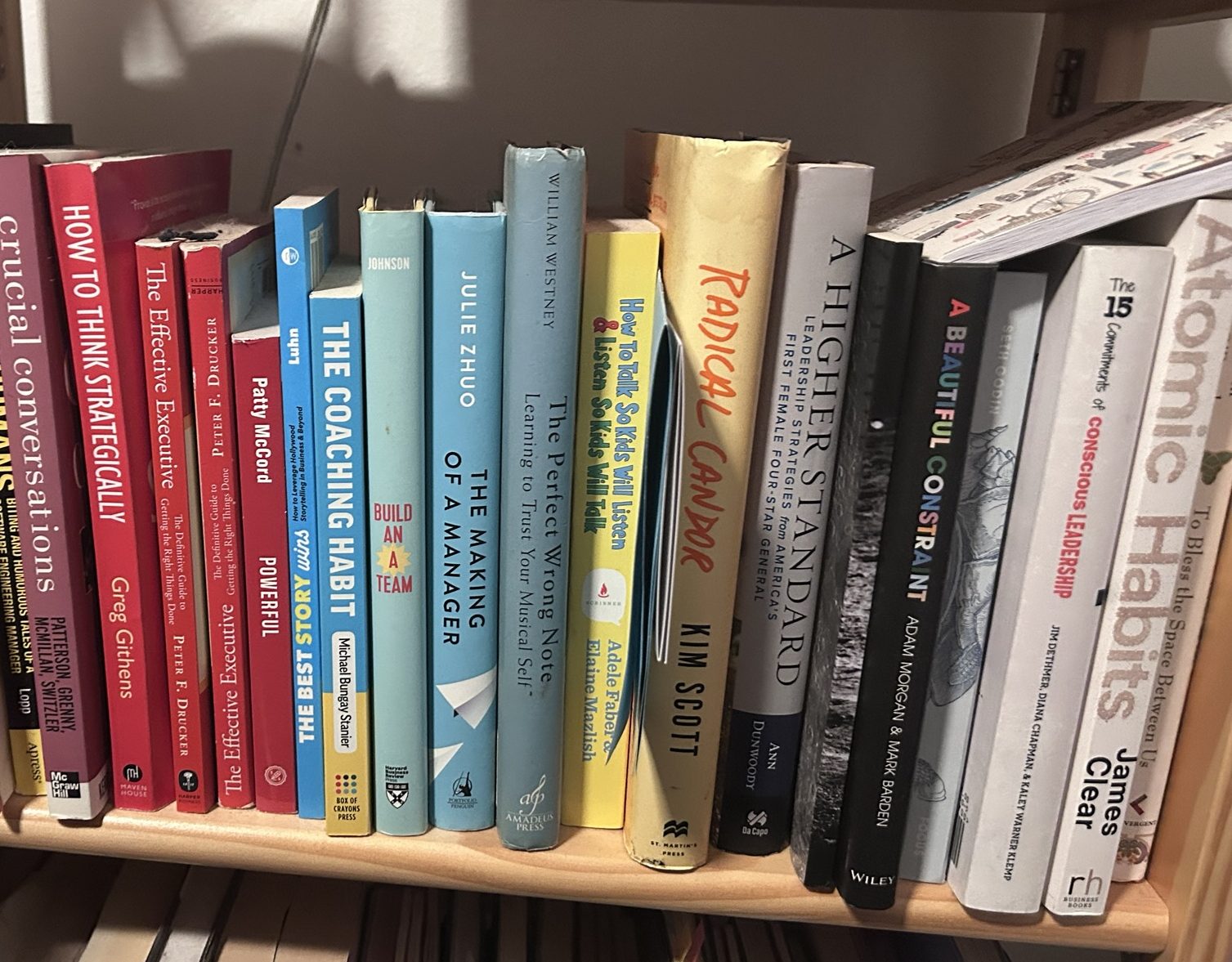
    At Automattic, self-learning isn’t just allowed, it’s encouraged and it is a core part of who we are as a company. It’s in our creed. In my years at Automattic, certain books have really shaped how I think and work. I have filled my own bookshelf with leadership, talent, coaching, and feedback related books. “The War of Art” by Steven Pressfield really stands out because it helped me understand creativity and how we sometimes (all the time) get in our own way. Titles like “Radical Candor” by Kim Scott, “Hire with Your Head” by Lou Adler, “The Coaching Habit” by Michael Bungay Stanier, and “Becoming a Conflict Competent Leader” have given me practical leadership tools I use almost every day. Our company library embodies our culture of learning, with resources for a wide range of interests, from technical to leadership to design, and more. Just like my husband and I helped our boys find their own way to learn, Automattic helps each of us grow professionally in a place where being curious is a good thing.

  • The Coffee Shop Name Saga Continues

    I’ve always had a challenge getting people to say my name correctly. This is especially entertaining at coffee shops, as I was reminded this past week when a barista really did try, but still ended up way off.

    The correct pronunciation of my name, Karen (where the first syllable is pronounced like the vehicle and there’s a clear “eh” sound in the second syllable), is typically considered to have Scandinavian origins, particularly Swedish or Norwegian. I’m not really sure where my parents came up with it as it’s not a family name, but my mother’s ancestors were Norwegian, so that’s likely the where it came from. I was also born in Nicaragua, so the Nordic pronunciation makes it easier to say my name in Spanish.

    In American English, it’s much more common to hear “Care-in” (where the first syllable rhymes with “hair”).

    Going back through old blog posts, I realized this isn’t the first time I’ve documented my coffee shop problem:

    Once someone actually spelled it correctly without my having to spell it for them. But then, of course, when my order was ready, they called out my name incorrectly.

    Over the years, I’ve collected a gallery of creative interpretations: Carien, Lauren (sorry, don’t have photographic evidence of this one), Kare, Tarin, and Carmen multiple times.

    I hope you enjoy this latest addition to my collection of coffee cup aliases. At least they got the vowel sound correctly. At this point, I’m considering starting a photo collection of all my coffee cup name variations to hang on the wall in my kitchen as a testament to the ongoing saga of my mispronounced name.

  • Claude, my Assistant: Working Smarter with AI

    At Automattic, we use AI tools regularly – it comes naturally when you’re a software company. As someone who focuses more on people and operations than code, I’ve found interesting ways to use AI to do more. I’ve been using Claude as an assistant – someone who can take a messy pile of information and transform it into something clear and actionable.

    Disorganized to organized

    Here’s an example of what I mean: Recently, I had Claude analyze a collection of recruitment performance data. It then spit out some comparative tables, visualized trends, and helped me identify patterns across my team. Instead of spending hours compiling and formatting this information, Claude handled the initial work while I focused on interpreting what the patterns meant for our team. It wasn’t perfect, but did clear away a lot of fog so I could focus better.

    Another example is how I used Claude to help me develop documentation on objective hiring best practices. I needed to pull together multiple resources, analyze what we already have, and find gaps in our understanding. I started with outlining the problem space, shared our scenario, and Claude proposed a structure. Through several iterations, I refined it from being too specific to something more broadly applicable across different hiring scenarios.

    I developed an outline and then Claude created initial drafts based on the outline, then we went back and forth to refine and revise. As I provided feedback about specific sections, Claude helped rewrite them to really speak to our Talent team’s needs. For instance, when I needed to explain the importance of scorecards, I wasn’t sure where in the document to put the new information and Claude suggested the perfect spot in the flow with the right level of detail – technical enough to be useful, but not so dense that it would overwhelm.

    I also used Claude to plan my garden, which, admittedly, was a totally different kind of task. I shared my constraints – the size of my garden plots and the types of plans I’m interested in – along with the NMSU Extension Office gardening guide. Claude created a layout  for me and planting schedules. I also appreciate the back and forth that can be done. Claude doesn’t get everything right and can’t know all the nuance, but I can add more and more details, correcting and adjusting as I go along, until I get pretty nearly what I want. I was even able to get a seed shopping list and recommended shops.

    What I appreciate most is how this approach lets me focus on the strategic thinking while handing off the initial analysis and organization. It’s not about replacing my work – it’s about having a really efficient way to get from raw material to a more-or-less polished final product. Cliche, I know, but it’s about working smarter, not harder. I still drive the process and make the decisions, and having this kind of analytical and organizational support helps me tackle projects and get faster results. 

    I even had Claude help me sort out the information to include in this post. Sorry, not sorry. I went through some of the more interesting projects I’ve worked on recently, had Claude go through them and analyze how the tool helped me in those cases.

    Onward and upward!

  • Finding Gratitude

    It’s easy to get caught up in where we want to be, as opposed to where we are. For example, when I paint – I get hyper-focused on the end result and forget to notice the process itself. Over the past few months, I’ve been thinking a lot about gratitude and how it shows up in unexpected places.

    My mom taught me many things. One unexpected lesson that popped up throughout our relationship was how grateful she was for everything. Even as Alzheimer’s stole her memory, she’d notice things the rest of us took for granted – the way clouds wrapped the crest of the mountains, new car colors on the street, even uneven sidewalks that needed fixing. Her repetitive Alzheimer-induced observations could be frustrating. But at the same time, she was teaching me, and everyone around her, something profound about paying attention and finding wonder in ordinary moments.

    Chatting with my mom

    This carries over into work life too. During our recent alignment changes at Automattic, I found myself grateful not just for the colleagues who stayed, but for what each person who left had brought to our journey together: shared projects, solved problems, and moments of growth. Sometimes it takes a shake-up to make you appreciate the everyday.

    One habit I’ve managed to maintain over time is waking up an hour before I have to log into work. Nothing fancy, just making my coffee, settling into my favorite corner with my Bible, catching up on the news, or playing a game on my phone. It’s not Instagram-worthy, but it’s my way of holding space for gratitude. Mainly preparing mentally for the day ahead, in the quiet of the early morning, before the rush begins, taking a bit of time for quiet while the rest of my household is still asleep.

    I always want to do more, of course. I always have good intentions about setting aside time to paint or journal. But between early meetings, family responsibilities, and the general rush of life, these often get pushed aside. I expect I am not alone in this.

    Yet even small things matter. For example, during my recent sabbatical, I logged 106 entries in Day One; just daily moments worth remembering. I wanted to do this because I knew I would miss the many small blessings of day-to-day life if I didn’t take the time to record them.

    This isn’t the first time I’ve written about gratitude, so I guess it’s something I think about a lot. It’s important! As I move through the days, I see it show up in unexpected ways. When spending time with my mom, I learned to be thankful for her moments of clarity, shared laughter, and even watched the simple recognition in her eyes. Gratitude isn’t just for the big moments – it’s in the small connections and the daily rituals.

    Like my painting style that develops over time, maybe gratitude is something that grows with practice – even imperfect practice (of which I have PLENTY). It’s not about forced positivity or ignoring life’s challenges. Instead, it’s about trying, however imperfectly, to notice, to appreciate, to say “thank you” for what each day brings – even if that day brings uneven sidewalks and repeated stories.

  • I’m Staying

    The last few days at Automattic have been… something else. The Alignment Offer has come and gone, and while we’ve had to say goodbye to some wonderful Automatticians, I am more committed than ever to our mission and the work we do.

    Over the past few days, I couldn’t help but reflect on my journey with WordPress and Automattic, and the feeling that comes up again and again is a sense of deep gratitude. Back in 2006 or thereabouts, WordPress changed my life. I started a business that supported my young family, I co-founded the ABQ WordPress community, and eventually, I joined Automattic – a move that was truly life-changing for us.

    This company has given me so much. My husband and I were able to homeschool our children while traveling the country (and beyond) with them. It’s taken me to places I never dreamed I’d visit and I’ve met incredible colleagues from around the world. I’ve seen over and over how our distributed work model changes lives. Talent is indeed distributed globally, even when opportunity isn’t.

    At Automattic, I’ve had a hand in developing a revolutionary way of working. Transparency isn’t just a thing we give lip-service to – it’s the foundation of everything we do. We give and receive trust in equal measure. We lean into questioning the status quo, experimenting, iterating, making mistakes, fixing them, and always striving to find better ways to do what we do. We don’t get it right all the time, but we try.

    I never considered the Alignment Offer. Of course, a lump sum of 6 months’ salary is going to be tempting. But there’s still so much good work to be done here. We are a smaller team now, but we’ll be stronger for it. I’m excited (and okay, a little scared) about what’s to come. But I know it will be good.

    Change is scary, no doubt about it. Losing respected colleagues is tough. And I’m grateful they were all able to make their decisions from a position of strength, cushioned by a generous severance package. For those of us staying, as we mourn the loss, I hope there will be a renewed sense of purpose and alignment. I can see the signs of it already as I look across my colleagues and see them paving their own way through.

    I love this place. I have good work to do. Mission. Impact. These aren’t just words – they’re the reason I’m here, the reason I’m staying. WordPress and Automattic have been transformative forces in my life, and I’m committed to paying that forward.

    Here’s to the next chapter. There’s work to be done, and I’m ready for it.

  • When Your ‘Meh’ Painting Makes the Cut: A Lesson in Artistic Humility

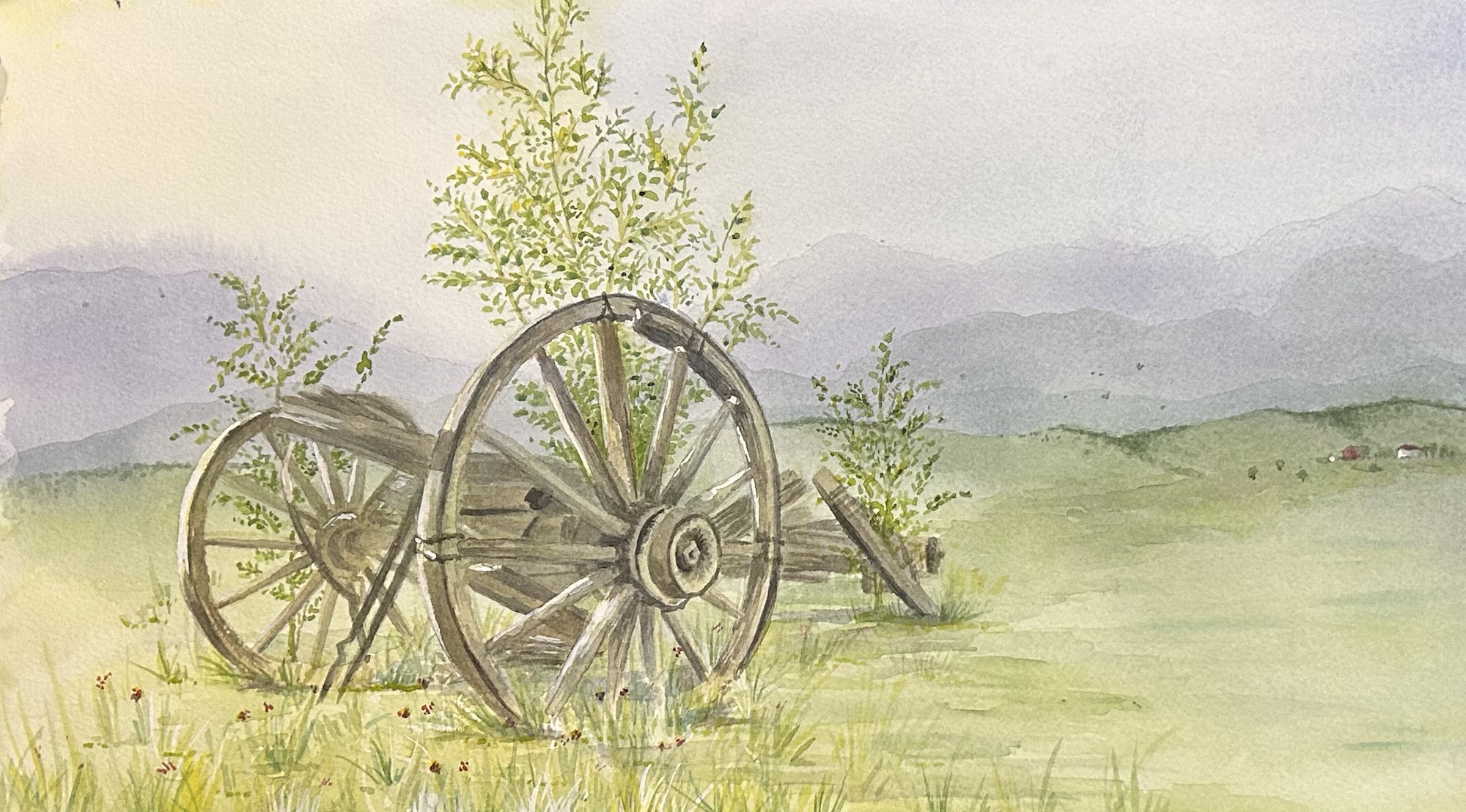
    I recently submitted two watercolor paintings to a juried art show for members of the New Mexico Watercolor Society, happening in Las Cruces, New Mexico this fall. The theme is agriculture and farming over the history of this region. It took me some time to figure out what to paint because it’s not my usual vibe but I finally found inspiration from photos I’d taken on my aunt’s property. 

    The first painting, a an old pitchfork standing near a pile of mulch just flowed. There was something about the the colors of the fork, the play of light on the metal, and the hint of green foliage that felt natural to me. I had fun getting the textures just right, building up layers of color to capture what I felt was a sun-baked, well-used look. I felt really good about it.

    Then there was the wagon. The reference photo was fun and I loved the play of light on the wheels. But something about it just didn’t click for me. I tried three separate times to get it right. Maybe it was the composition, or maybe it was the colors. Whatever the reason, I filed it under the “not my favorite” pile. 

    That said, when it came time to submit to the show, I included both. The pitchfork was a no-brainer – I was excited to share it. The wagon? My daughter (my trusted and honest art critic) said it was decent so I figured it couldn’t hurt to have a second entry. 

    When the results came in, the wagon had been selected for the show. The pitchfork, my favorite, didn’t make the cut. When I opened the email, I laughed and laughed. Isn’t that just the best way to keep an artist humble! What a valuable lesson about art, subjectivity, and the importance of just putting your work out there.

    I don’t know an artist who can’t see a mistake or something to be improved in their work. If they don’t admit it, they’re probably faking it. And what we see as flaws in our work might be the very things that others like. And sometimes, the pieces we’re less emotionally attached to can speak to viewers in ways we never anticipated.

    So, I’ll keep creating, keep submitting, and try not to get too hung up on what I think is my “best” work. Put it all out there and let go of the need for control. 

    I can’t wait to see the painting hanging on the wall at the New Mexico Farm & Ranch Heritage Museum in Las Cruces — October 11- November 18, 2024. 

  • Serenity in Chaos: Embracing Circles of Control and Influence

    I’ll let you in on a couple of secrets. First, I’m a massive control freak inside my head, and second, I worry. A LOT. About everything. In some areas of my life, I hide it so well that people are genuinely shocked to learn this about me. In fact, I’ve had friends say, “But you’re so chill!” In other areas, it’s more obvious, as my kids can attest. I work hard to be chill and not control everything, and I put in a ton of effort to not sweat the small stuff and keep things as simple as possible. It’s a constant battle, but one I’m committed to fighting.

    The other day, my awesome HR partner shared this article with me. In our bi-weekly catchup call, we’d been chatting about control and knowing what’s actually in your control and what isn’t. The article discusses the “Circles of Influence, Concern, and Control” concept. It’s very simple and powerful – some things you can control, some you can influence, and others you can only worry about. It’s up to you to figure out where to put your energy.

    1. Circle of Control: This is where we have direct control – our thoughts, our actions, and our reactions.
    2. Circle of Influence: This is the stuff we can impact but not directly control – personal relationships, things at work, etc.
    3. Circle of Concern: This is the stuff we care about but can’t do anything about – the economy, weather, other people’s opinions, etc.

    The circles are nested, so the third circle is the biggest, the second sits inside that, and the first sits inside that one. The stuff you can control is the smallest area, get it?

    Knowing about control and spheres of influence doesn’t make it easy to manage. That said, there are a few questions I try and keep front and center:

    1. Can I actually control this?
    2. If not, can I influence it somehow?
    3. If it’s totally out of my hands, can I just… let it go?

    Reading about this concept reminded me of the old Serenity Prayer: “God, grant me the serenity to accept the things I cannot change, courage to change the things I can, and wisdom to know the difference.” I don’t need to control every little thing or win every battle to be okay. Sometimes, the best move is to loosen my grip and just… trust. And when I stop trying to control everything, life has this weird way of working itself out.

  • Coworking on Sanibel Island

    When I decided to park my RV on Sanibel Island for a few days, I pictured a perfect blend of work and beach life. I didn’t anticipate the challenges that would come with finding workable connectivity. Finding good mobile coverage for working on the road can be a major headache, but these days, my mobile coverage is usually sufficient as long as I’m in relatively populated areas.

    No sooner had we arrived at our RV park, I realized this one was going to be tricky. A scheduled meeting with my business coach turned into a laugh a minute as we tried Zoom on my laptop, then my phone, before settling for an old-school phone call.

    After the call, I got busy finding a work set up. Off we went on an island-wide exploration. I scoped out every coffee shop (and there are a few), the local grocery store with a cozy coffee shop, even finding myself on a bench outside the local library, running speed tests.

    In my search, I went to the googles and found “coworking spaces” on Sanibel that didn’t exist but were options off the island. I was hopeful about the library option though!

    The Sanibel Public Library is a hidden gem (probably not so hidden, I guess): study rooms equipped with monitors and great internet.

    Library entry

    I love a good library and I find it particularly pleasing to see one that operates like a community center, with resources not just for locals, but for transient workers like myself who need a reliable space to connect and create. They even have laptops for rent!

    The lesson? Sometimes, the path to balancing work and leisure requires a bit of creativity and flexibility. I only work from the road for a few months out of the year, and it’s worth it! But it does require some resilience to make sure I can have productive workdays and relaxing beach evenings.

    For fellow digital nomads considering a stint on Sanibel, know that with a little ingenuity, you can also have your beach life and your work life. The perfect spot might just be hiding in plain sight, like the wonderful public library I discovered.

  • Pivoting, Learning, Thriving: The Antifragile Talent Team

    I want to chat about something that’s been swirling in my mind for the last week – antifragility in talent acquisition. You know how sometimes life throws curveballs that make you stronger? Well, that’s kind of what antifragility is all about.

    I was first introduced to this concept through Matt, Automattic’s CEO, in Nassim Nicholas Taleb’s book Antifragile: Things That Gain from Disorder (first in 2013, a couple of times in 2020, and a number of times in our internal company communication). The basic idea? Some things don’t just resist shocks—they actually get better because of them. Makes sense to me!

    Antifragility came up again last week in conversation, and it got me thinking: how does this concept apply to the teams that work on attracting, engaging, sourcing, assessing, and hiring talent? What about employer brand and candidate experiences? What does an antifragile Talent team look like across all these functions? Here’s my take:

    1. Flexible: An antifragile team is always ready to pivot. We constantly reassess and tweak our approach based on the needs of the environment. It’s like how I adjust my watercolor technique based on the mood I’m trying to capture (sorry not sorry for including a watercolor reference)—always adapting.
    2. Multi-talented: Everyone brings something different to the team; some love data analysis, others have amazing networks, and others can make sense of chaos and put processes together. Together, we’re ready for anything.
    3. Knowledge seekers: For this, we go to the Automattic Creed. We never stop learning at Automattic; we learn when we get something right, we learn when we mess up, we learn when we have crucial conversations, it never stops. An antifragile team is a learning machine, staying ahead of the curve on new tech and recruitment strategies.
    4. Data-informed: We don’t just go with our gut – we use data to make decisions and refine our processes. And thusly, we’re able to try new things and see what works and what doesn’t.
    5. Dynamic: Our processes are flexible and ready to change at a moment’s notice. Scale up? Got it. Scale down? No worries. Well, maybe a little worry, but that’s a natural human thing; we just don’t let it block us.
    6. Tech-savvy: We leverage tech to enhance our efforts. We also embrace experimentation, piloting new things, keeping what works, and moving on from what doesn’t.
    7. Optimistic: Challenges? We see opportunities. It’s all about our outlook.
    8. Team players: We don’t work in silos. We’re closely connected with other areas of the business, so we stay on top of what’s important to our colleagues.
    9. Curious: We play out different scenarios to keep us ready for whatever comes our way.
    10. Brand builders: We are always working on making the company look like a place people want to work, like curating your LinkedIn but for your employer brand.
    11. Champions: We know that every interaction with a prospective candidate matters. We are all about creating experiences that make people want to join the team.

    Building an antifragile talent acquisition team isn’t easy. It takes time, effort, mistakes, and a willingness to embrace change. But in a world as unpredictable as a watercolor wash, it’s the key to surviving and thriving.